
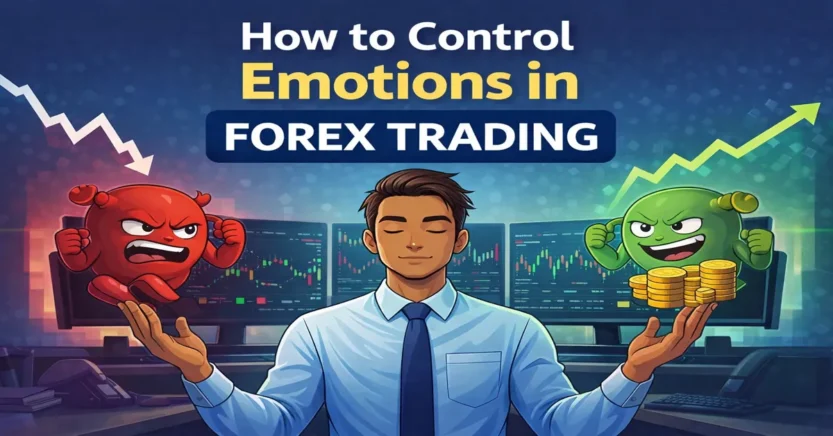
How to Control Emotions in Forex Trading
How to Control Emotions in Forex Trading: In reality, your emotions can either make or break your trading career. Therefore, learning how to control emotions in forex trading is not optional; it is essential.
What You Will Learn in This Guide
In this complete guide, you will discover:
-
Practical strategies to manage emotions
-
Psychological techniques for better focus
-
Proven habits to stay disciplined
Why Emotional Control Is Crucial in Forex Trading?
First of all, forex trading involves uncertainty. Prices move constantly, and no trade is guaranteed to win. Because of this, your mind naturally reacts with emotions such as fear, greed, and anxiety.
How Emotions Affect Trading Decisions
For example, when a trade goes against you, fear may push you to close it too early. On the other hand, when you are in profit, greed may tempt you to hold longer than necessary.
As a result, emotions can lead to:
-
Impulsive decisions
-
Overtrading
-
Ignoring trading plans
-
Increased losses
Therefore, if you want to succeed, you must learn how to control your emotions effectively.
Common Emotions That Affect Forex Traders
Before you can manage your emotions, you need to recognize them. Below are the most common emotional challenges traders face.
- Fear in Forex Trading
When Fear Happens:
-
You are about to enter a trade
-
The market moves against you
Because of fear, traders may hesitate or exit trades prematurely. Consequently, they miss profitable opportunities.
2. Greed in Forex Trading
Signs of Greed:
-
Increase lot sizes unnecessarily
-
Ignore stop-loss levels
-
Chase unrealistic profits
However, greed often results in significant losses instead of gains.
3. Hope in Trading
Hope might seem positive, but in trading, it can be harmful. For instance, traders may hold losing trades, hoping the market will reverse.
Unfortunately, this often leads to bigger losses.
4. Revenge Trading
After experiencing a loss, some traders try to recover quickly by placing impulsive trades. This behavior is known as revenge trading.
As expected, it usually leads to even more losses.
5. Overconfidence
Sometimes, after a series of wins, traders become overconfident. As a result, they may ignore their trading rules and take unnecessary risks.
Effective Ways to Control Emotions in Forex Trading
1. Create a Solid Trading Plan
First and foremost, a trading plan is essential. It acts as your guide and helps you make logical decisions instead of emotional ones.
Your trading plan should include:
-
Entry and exit rules
-
Risk management strategy
-
Trading schedule
-
Goals
By following a plan, you reduce uncertainty. Consequently, you feel more confident and less emotional.
2. Use Proper Risk Management
Another effective way to control emotions in forex trading is through proper risk management.
For example:
-
Risk only 1–2% of your account per trade
-
Always set a stop-loss
-
Avoid over-leveraging
When your risk is controlled, you feel less pressure. As a result, you can trade more calmly.
Proper risk control is essential for emotional stability, so you should learn more about forex risk management strategies to protect your trading account.
3. Accept That Losses Are Normal
It is important to understand that losses are part of trading. Even professional traders experience losing trades.
Why this matters:
-
Reduces emotional stress
-
Improves decision-making
-
Builds mental strength
Therefore, instead of fearing losses, you should accept them as part of the process. By doing so, you reduce emotional stress and improve your decision-making.
4. Avoid Overtrading
Overtrading often happens when traders are driven by emotions such as greed or frustration.
To prevent this:
-
Set a daily trading limit
-
Trade only when your setup is valid
-
Take breaks after losses
In this way, you maintain discipline and avoid unnecessary risks.
5. Keep a Trading Journal
A trading journal is a powerful tool. It helps you track your performance and emotional behavior.
For example, you can record:
-
Entry and exit points
-
Reasons for each trade
-
Emotional state during trading
Over time, you will notice patterns. Consequently, you can improve your emotional control.
6. Develop a Trading Routine
Consistency is key in forex trading. Therefore, having a daily routine can help you stay focused.
Your routine may include:
-
Market analysis
-
Reviewing economic news
-
Checking past trades
As a result, you become more organized and less emotional.
7. Take Breaks When Necessary
Sometimes, the best decision is not to trade. If you feel stressed or frustrated, it is better to step away from the market.
Taking breaks helps you:
-
Clear your mind
-
Reduce emotional pressure
-
Avoid impulsive decisions
8. Focus on Long-Term Success
Instead of chasing quick profits, focus on long-term growth. This mindset helps you stay patient and disciplined.
After all, forex trading is not a get-rich-quick scheme. Rather, it is a journey that requires consistency.
Psychological Techniques to control emotions in forex trading
In addition to practical strategies, you can use psychological techniques to control your emotions.
- Practice Mindfulness: Mindfulness involves being aware of your thoughts and emotions without reacting impulsively.
- Use Deep Breathing: Deep breathing can help reduce stress and anxiety. Therefore, if you feel overwhelmed, take a few deep breaths before making decisions.
- Stay Physically Active: Physical exercise improves mental clarity. As a result, you can make better trading decisions.
- Get Enough Rest: Trading while tired can lead to poor judgment. Therefore, ensure you get enough sleep before trading.
Common Mistakes to Avoid
Even if you know how to control emotions in forex trading, you must avoid these common mistakes. Otherwise, your emotions can still take control and affect your decisions.
1. Trading Without a Plan
-
You rely on emotions instead of logic
-
You enter trades randomly
-
You lack consistency
As a result, your performance becomes unpredictable.
2. Ignoring Stop-Loss
-
You allow losses to grow uncontrollably
-
You depend on hope instead of strategy
Consequently, a small loss can turn into a major one.
3. Chasing the Market (FOMO)
-
You enter trades late
-
You react to hype instead of analysis
Therefore, you often buy high and sell low.
4. Trying to Recover Losses Quickly
-
You engage in revenge trading
-
You increase lot size impulsively
As a result, you risk damaging your trading account.
5. Overtrading
-
You take too many trades in a short time
-
You ignore your trading rules
In the long run, this leads to emotional exhaustion and losses.
Real-Life Example of Emotional Trading
Imagine a trader who enters a trade without a clear plan. Initially, the trade goes into profit. However, instead of closing at the target, the trader becomes greedy and waits for more profit.
Suddenly, the market reverses. At this point, fear sets in. Instead of closing the trade, the trader holds on, hoping the market will recover.
Eventually, the trade hits a large loss.
This example clearly shows how emotions can lead to poor decisions. Therefore, controlling emotions is essential.
Tips to Build Emotional Discipline
To become a successful trader, you need discipline. Here are some practical tips:
-
Follow your trading plan strictly
-
Accept both wins and losses calmly
-
Avoid trading based on emotions
-
Stay consistent in your approach
-
Learn from your mistakes
How Long Does It Take to Master Emotional Control?
Emotional control is not developed overnight. It takes time, practice, and self-awareness.
However, with consistent effort, you will gradually improve. Over time, you will become more confident and less emotional.
Final Thoughts
In conclusion, learning how to control emotions in forex trading is one of the most important skills you can develop. While strategies and indicators are important, emotional discipline is what truly determines your success.
Therefore, by following a trading plan, managing risk, and staying patient, you can significantly improve your trading performance.
Remember, successful trading is not about winning every trade. Instead, it is about making consistent, disciplined decisions over time.
To improve your analysis and stay confident, you can analyze the market using Tradingview, a professional charting tool.
